Literature
The undiscovered 'Easter Egg' in Stegner's masterpiece
It has to do with raw chicken. Let me explain.
Literature
The undiscovered 'Easter Egg' in Stegner's masterpieceIt has to do with raw chicken. Let me explain.
Culture
The power of a pure idea: The Finger-SpaceThe rip-roaring tale of Marc Antoine de Muret, Fragment 31 and the greatest literary scoop of the 16th century
Earth Science
Our brains are not wired to understand geologic timeIf they were, we might reach some very different conclusions about our planet
Drama
Sophocles and the Pink Pony ClubWhat we learn about how a good society works from a survey of world literature
Age of Discovery
Volta do marWe must sometimes risk the perils of the wide open ocean if we are to discover new worlds
Culture
Has intelligence gone out of fashion?It might soon be time for a retro revival
Finance
How financial markets actually workI'm taking a swipe here at a Nobel Prize winner - maybe not a good idea, but if you work in finance you'll understand my motivation
Politics
The end is near for Sir KeirHe seems to have a nasty case of Stanley Baldwin disease
Society
A red traffic light at 3amNot a soul in sight and the town is fast asleep. What do you do?
International Relations
NATO and 1984Will Ukraine be betrayed by doublethink and boiled rabbits?
Markets
Is the AI bubble bursting now?Opinions are divided (but I have taken a view)
Climate
Bill Gates and Point BreakA look at the Gates climate letter through the lens of an iconic, 1990s surf dude film
Politics
The dumbest thing a Congressman saidSo daft, you won't know whether to laugh or cry
Drama
What we learn about how a good society works from a survey of world literature
Music experts can’t decide if Chappell Roan’s multi-platinum hit Pink Pony Club is best described as pop, synth-pop, dance-pop, power-pop, disco-pop or just plain disco. Perhaps the label is not important, but what does matter is that you know the song. So if you haven’t heard this one before, here it is. Have a listen. The question for this article will be: what is this song about?
You probably think the subject of the song is obvious, and of course you’re right. But I will argue that beyond the obvious subject of the song, Chappell Roan is singing about something deeper and harder to deal with, and which is a perennial challenge to the structure of a good society. In that respect she is singing about the same central problem as Sophocles and most great literature since the late Bronze Age. So bear with me because that’s a big claim and a long-ish span of time. I may need your attention for more than the customary three minutes.
Pink Pony Club is a very good song. But so is the Keš Temple Hymn which has the additional distinction of being the oldest example of human literature to have survived to the modern era.1 The Temple Hymn is a song of praise to a Sumerian goddess, written in cuneiform script on clay tablets discovered at Tell Abu Salabikh (modern day Iraq) in the 1960s. Its sections move through the eight houses of Keš and end with an ambiguous welcome to the visitor: “draw near, but do not draw near”. The Sumerian goddess was apparently approachable, but also not approachable. The paradox of the divine.
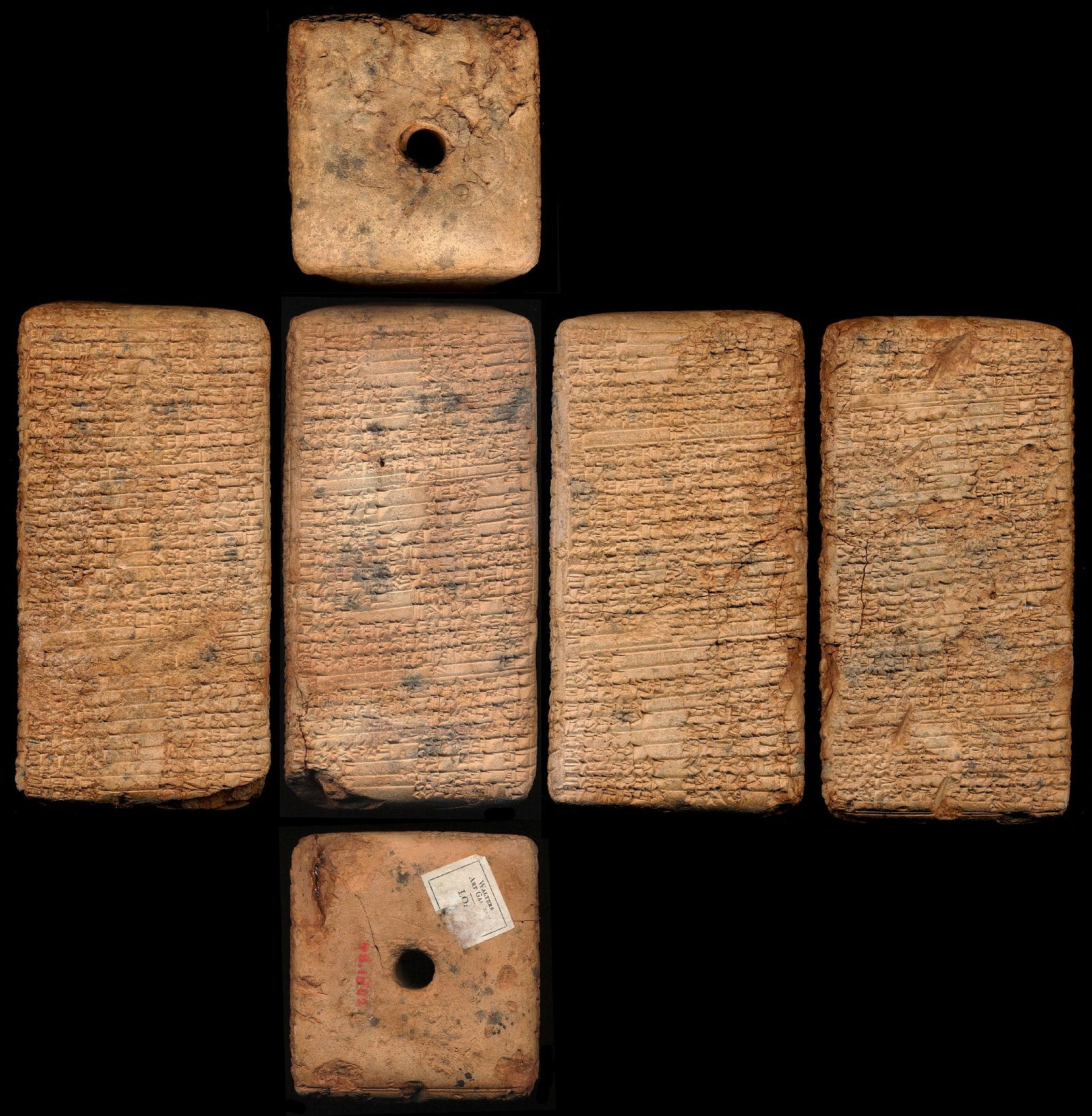
Scholars think that the Keš Temple Hymn dates to about 2,600 BCE. In the centuries which followed, the Mesopotamian record moves forward through a number of other famous survivors: from the Instructions of Shuruppak and Enheduanna’s Hymns all the way to the Epic of Gilgamesh. Similar examples survive from Egyptian culture too, including the story of the Shipwrecked Sailor and early instances of the Book of the Dead, as well as from Anatolia and Asia, including the earliest Chinese oracle bones - inscriptions written on the shoulder blades of an ox or, sometimes, on turtle plastrons.
Fortunate for us, because the plastrons turned out to be durable, but too bad for the turtles.2
Still, the question of what our distant ancestors wrote on is less interesting than the question of what they wrote about. The themes of these earliest examples of literature are perhaps not surprising. Frequently the texts present catastrophe and death as the fundamental human problems requiring explanation: across a mix of laments, eulogies, heroic poetry and wisdom texts, the unifying question is often a version of ‘what survives of us after death?’. The authors are seen to be wrestling with mortality in a way which, without too much exaggeration, traces a straight line to The Arundel Tomb, though with different answers produced along the way.
In the earliest literature, the answer to that mortal question, or the lack of an answer, is generally dealt with by locating humans within a larger cosmic order. Gods, fate, ancestors and sometimes the notion of ancestral sin are called upon repeatedly to explain misfortune, tragedy and death. There is sometimes an underlying idea of human crimes deserving punishment, but in broad terms the earliest writers set out to describe and accept the misfortunes of life rather than to challenge or change the natural order from which those misfortunes arise.
What’s interesting is that such fatalism in the face of natural events gives way to a greater sense of agency in matters of social organisation. So if the first project is to describe the unchangeable cosmic order, the second project is to articulate the changeable human one. The Egyptian Middle Kingdom story of The Eloquent Peasant (dating from around 1850 BCE) is a wonderful example: in this remarkable story, an honest peasant taking his goods to market is robbed by a corrupt official. But rather than accept his fate, the eloquent peasant appeals to the authorities; his case eventually reaches the king; the corrupt official is dispossessed; the peasant’s property is reinstated. It is a morality tale and a recommendation for the justice system at the same time. Above all it is literature about how we should treat each other.
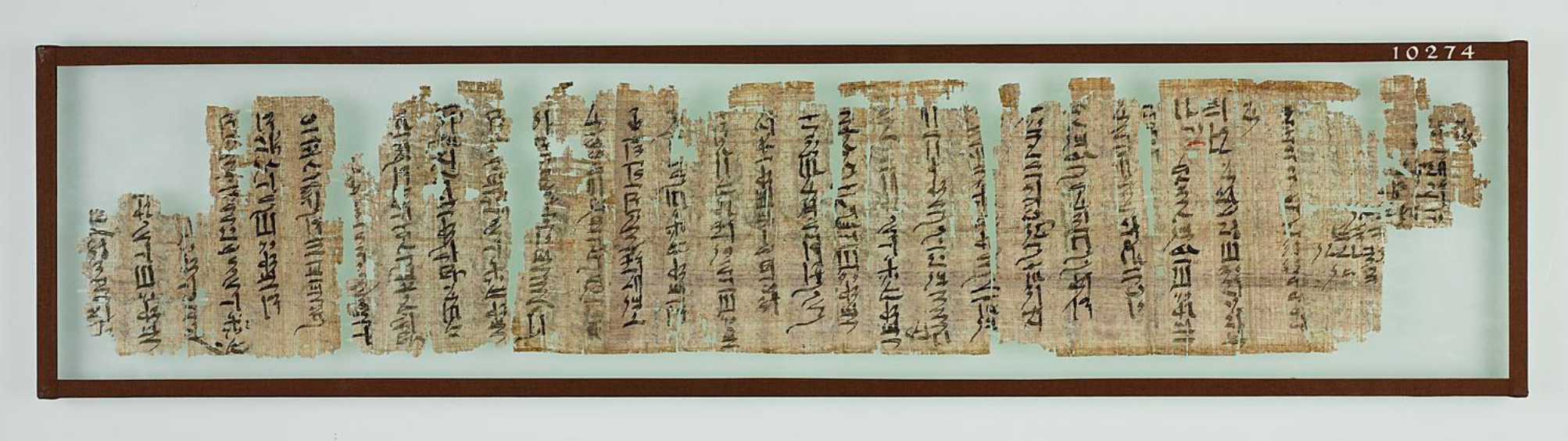
To summarise, the earliest writings we know of today collectively deliver a simple, two-part message. The first lesson is that we cannot organise the universe, while the second is that we can perhaps learn to organise ourselves. Of course it is difficult and perhaps artificial to summarise so briefly the common theme of all the early literature we have inherited. But if forced to capture in a single phrase what we see across the corpus of early Bronze Age stories, songs and inscriptions, we could do worse than say the following: these texts show our ancestors wrestling with the question of how to live well in a world governed by forces far more powerful than themselves.
They carried on thinking that way for another thousand years or so.
And then came the Greeks.
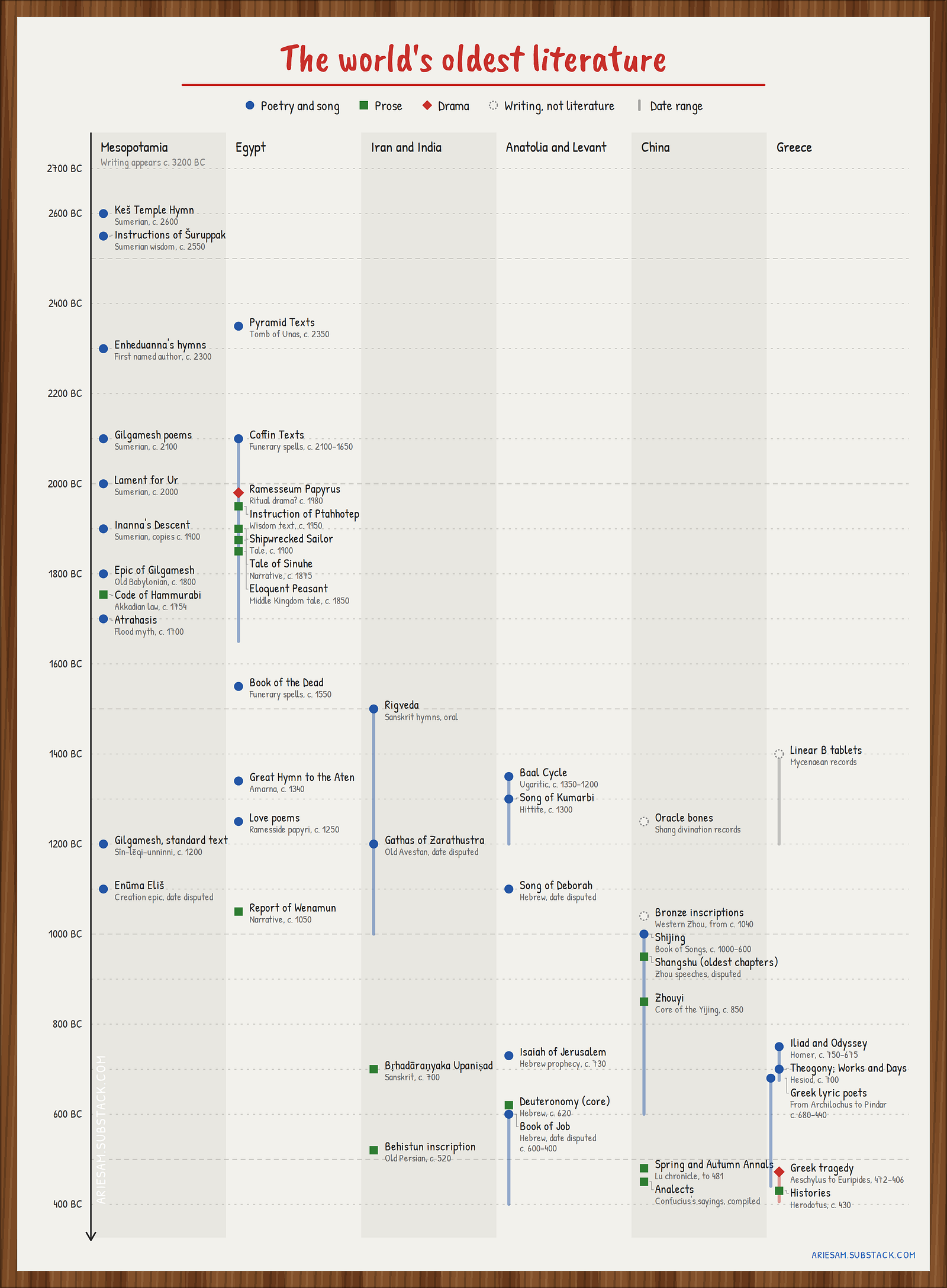
The earliest surviving works of Greek literature are The Iliad and The Odyssey, epic tales attributed to ‘Homer’ but whose origins clearly lie in the oral tradition of the storyteller, passing down fireside tales from one generation to another. The renditions we know are most likely dated to the late Iron Age, but they remember and recount a lost world of Bronze Age warriors and adventurers.
Still, these were not the first examples of epic poetry: Gilgamesh, Atra-hasis and the Baal Cycle are all older. What The Iliad and The Odyssey achieved which was new compared to their precursors was an order-of-magnitude increase in narrative complexity and ambition. Indeed, the case can be made that Homeric poems are the early ancestor of the modern novel with a cast of central characters - Achilles, Hector, Priam, Odysseus, Penelope - whose individual stories are developed through detailed narrative and intimate scenarios from the battlefield to the bedroom, with occasional glimpses of psychological depth.
In Homer on Life and Death, (1980), the book which put him on a path to become Regius Professor of Greek Literature at the University of Oxford, Jasper Griffin built a new reading of the epic texts. He argued that the Homeric characters gain meaning through their mortality: that Hector’s courage matters because he knows he cannot defeat Achilles; that Achilles’ glory is inseparable from his own short life. The Gods in contrast inhabit a realm where loss is never final in the human sense. They are the divine audience: observers of a vast cosmic spectacle which matters little to them, but at the same time is an unbearable catastrophe for the humans experiencing it. The Gods in this reading can be as two-dimensional as Suzanne Vega’s Marlene on the Wall (1985), a poster of Marlene Dietrich which mutely watches the singer’s romantic life unfold from the wall of her New York apartment.
Griffin’s thesis was right, the human characters in Homer are not flat like a Dietrich poster, only the Gods are. But for all the new poignancy, the Homeric tales still unfold in a world which is ordered and defined by capricious powers and as such they do not yet mark a categorical break between Greek literature and its earlier international precedents. The narrative touches at times on the evasive concept of dual causation (the idea that humans and gods may be responsible via different pathways for the same unfolding events) but the idea of human agency is not yet fully developed. Homer may tell us more than any earlier storyteller about what it is like to be Achilles, Hector or Odysseus, and why it matters to be them. But those heroes still live life at the mercy of the Gods. The world they inhabit is still governed by forces beyond their control.
Something similar can be said of Hesiod, the next major Greek writer we know of after Homer, who continues in the same direction. Hesiod’s Theogony, or Birth of the Gods, is the earliest text to organise the mythological origins of ancient Greece into a single storyline. If Zeus was the top God, Hesiod tells us how he got the job, and the story goes like this: Zeus’s grandmother Gaia (the Earth) is born from Chaos; she creates Ouranos (the Sky) and their children are the Twelve Titans, including Kronos and Rhea, the future parents of Zeus. Kronos then overthrows his own father Ouranos, but after a prophecy that he too would be overthrown by his own son, decides to devour the children first, nowhere more memorably depicted than in Goya’s unforgettable black painting below. Yet somehow Rhea hides the baby Zeus, who survives and later returns to overthrow his father, fulfilling the prophecy after all.
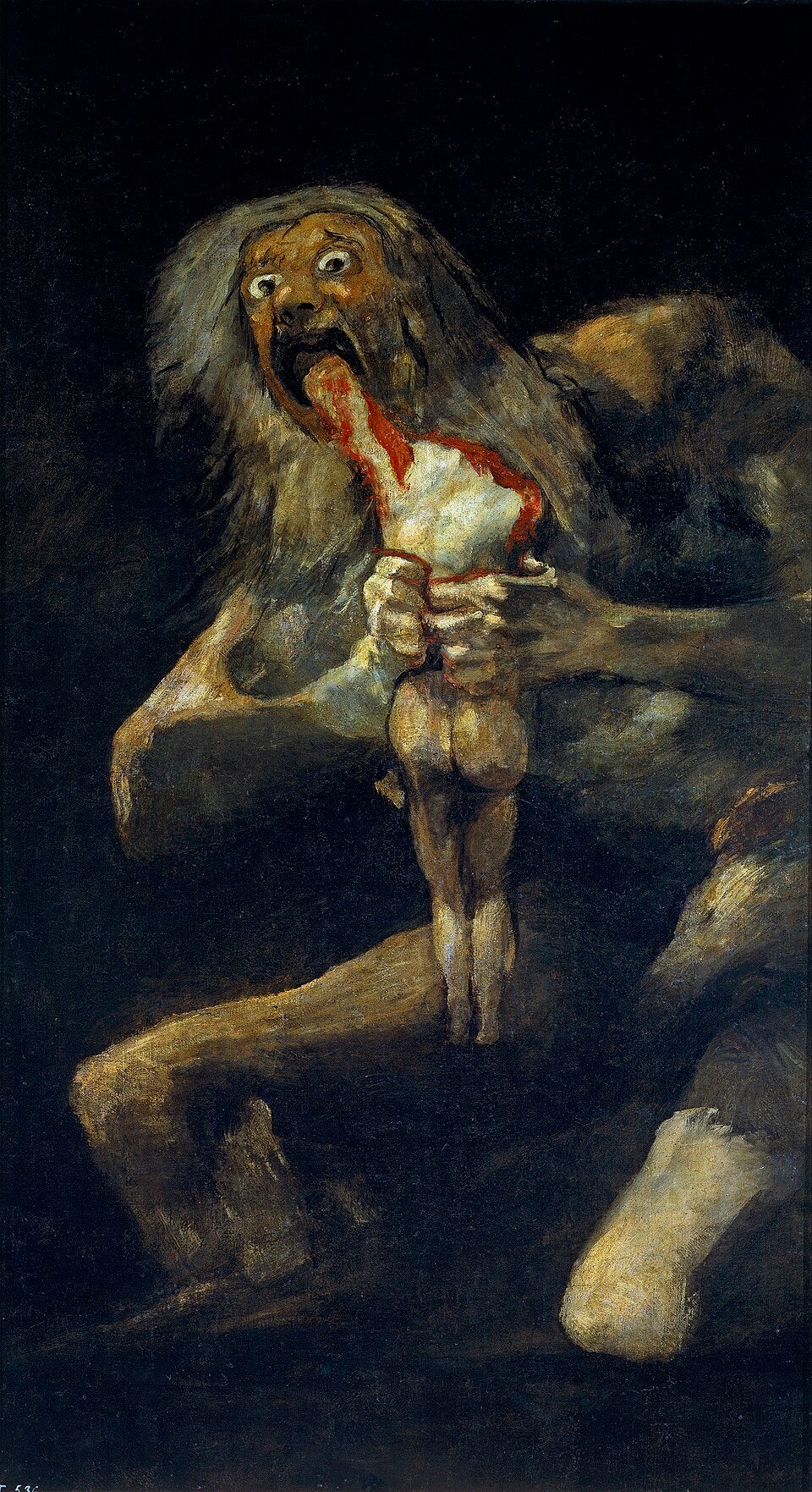
Hesiod’s other remaining work, the Works and Days, is the companion paper. If the thesis of Theogony is that order is achieved, not granted (with even the Olympian Gods emerging from chaos and a generational power struggle) then the thesis of Works and Days is that order in human affairs is also achieved, not given. Hesiod praises hard work, justice, foresight and moderation and even at times starts to sound like the grandfather of modern economics. In his opening lines for example he introduces the two Strifes affecting mankind, the first of which is destructive war, a scourge to be avoided, but the second of which is none other than productive competition:
Not one, but two Strifes live on earth … the one makes foul war thrive … the other … urges on even the slack to work. One craves to toil when others prosper … so neighbour vies with neighbour in great need of wealth: this Strife well serves humanity. Potter hates potter, builder builder, and a beggar bears his fellow-beggar spite. Likewise all singers.
Hesiod, Works & Days, c700 BCE. Translation by Christopher Kelk. Greek below.3
Does that not read like an early Adam Smith? Hesiod’s grip of collective psychology has moved beyond anything in Homer, and there is little comparable in the wider world literature beforehand. But although he travels further and faster, he is still moving along the same two rails as the Bronze Age writers. The Theogony is still telling you that vengeful and chaotic Gods control the universe. The Works and Days is still telling mere mortals how to live as well as they can within that framework.
To get to the real dislocation we need to push onwards to the tragedians, Aeschylus, Sophocles and Euripides, whose plays (written about two thousand years after the Keš Temple Hymn) were performed in 5th century BCE, often in the Theatre of Dionysus on the southern slope of The Acropolis in Athens. That theatre was enormous, it could seat an audience of thousands, a huge crowd for antiquity. The plays were fantastically successful.
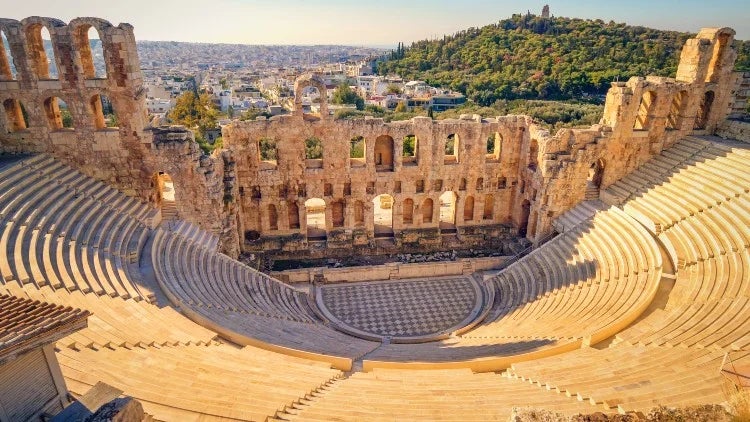
So what was new about the Greek tragedies? Of course, they inherited all the themes of prior literature - suffering, mortality, divine anger, vengeance and inherited guilt - but they also did something new. They showed that literature could do more than simply roll along the twin tracks of divine fatalism and social instruction. For a start, one widely observed point is that the tragedians were prepared to make arguments which went against the norms of their own enormous audiences.
What do I mean by this? Slaves, foreigners and women get strong speeches in Greek tragedy, and they often speak out effectively against the establishment. In different plays: Tecmessa chides Ajax for his selfishness and tells him that kindness creates a duty in return; Clytemnestra tells the elders that her crime is no worse than her husband’s, and they are left with nothing to say in reply; Medea says she would rather fight in battle three times than give birth once. Greek tragedy made these counter-voices surprisingly central to large-scale public drama.
The authors of Greek tragedy were also impressively willing to take the other side’s point of view. Aeschylus’ Persians is the oldest surviving Greek play (472 BCE). Its subject is the battle of Salamis, in which Aeschylus himself was probably a combatant, but the story is told from the point of view of the defeated Persians. Similarly, Euripides’ Trojan Women (415 BCE) shows the fate of another conquered nation, with Cassandra speaking out loudly against aggressive war - all in a play staged just a few months following the Athenian atrocities in Melos.
But there is an even more important change which occurs in the era of Greek tragedy, and it is the arrival of individual human agency as the central topic. In a landmark work, The Discovery of the Mind: The Greek Origins of European Thought (1953), German scholar Bruno Snell argued that the development of classical Greek literature reflected a gradual discovery of the inner workings of the mind and that Aeschylus was the first writer to make the very act of decision the subject of a drama.
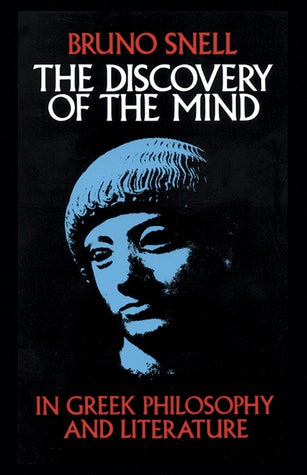
To take Snell’s first example: in Aeschylus’ play The Suppliant Women, the daughters of Danaus seek asylum with Pelasgus, and he must decide if he will offer them protection (as Zeus’ code requires) or risk starting a war with Egypt, whence they fled. He shares his thoughts aloud; notes that the dilemma requires deep reflection; sets out the choices; then realises that all of his options are bad. Snell argued convincingly that this was the first instance in literature of a character facing such a decision, defining it as a personal problem, weighing the options, making a choice and bearing the responsibility.
The contrast with the earlier poems is that in those stories, there is usually a God who puts an idea in the character’s mind or intervenes to stop them acting. Snell looked through Homer for a clear concept of a unified, deciding self - but couldn’t find what he was looking for. Bernard Williams later claimed that Snell should have looked a little harder.4 But by the time we get to the tragic plays of the fifth century BCE, there is no debate: central characters continually wrestle with situations and decisions. Their punishment is not always death, sometimes it can be an enduring life in which - like the tragic protagonist of Prometheus Bound - the hero must live forever with the consequences of his choices.5
Around the time that Goya was painting Saturn (Kronos) devouring his children on his walls, German philosopher Georg Wilhelm Friedrich Hegel was delivering his Lectures on Aesthetics in which he described Sophocles’ Antigone (first performed in Athens around 441 BCE) as one of the most remarkable works of art in all of human history.
The play tells the story of Antigone, whose brother Polynices lies dead outside the walls of Thebes. Her uncle, King Creon, has forbidden burial of the body. Antigone is thus caught on the horns of a classic dilemma: to obey divine law and bury her brother, or to obey human law, as decreed by her own uncle. When she chooses to bury Polynices, Creon then faces his own dilemma: to forgive Antigone or demand her death, and chooses the latter. By the time he regrets his choice, it is too late.
Hegel’s argument is that this is Greek tragedy at its best, presenting a collision between two ethical powers each of which is justified. Antigone and Creon are tragic characters because they have become one-sided: Antigone ignores the human law, Creon ignores the divine law, and by the end of the play both characters are destroyed. Hegel calls the resulting downfall "eternal justice": the ethical order reasserts its unity by destroying the individuals who attempted to split it apart.
But Hegel, in my opinion, has only half the point. Yes, Sophocles presents a cast of characters faced with conflicting choices and whose decisions end in disaster. But the key is that those characters and their choices are situated in a generational framework which cannot be ignored. Antigone in my opinion is a play about the generation gap. Yes, she follows her instincts while Creon follows the law. But she is also compassionate while he is insensitive. She is independent while he is procedural. She stands for challenge, he for authority. She for the family, he for the State. In short, you could say: she is young, and he is old.
Ironically the cleanest signpost to this reading comes in a scene in which Antigone is not present. She has been condemned to death, while Haemon, who is both her cousin and her fiancé, pleads with his father Creon for a stay of execution.6 The scene is astonishing in its total modernity. Creon first puts his case to his son, arguing that Antigone cannot be forgiven, for there is no greater crime than disobedience; that disobedience topples cities and armies; and the job of the King is to preserve the social order. He even tells his son he will forget her soon enough.
Haemon responds with a speech you won’t believe was written two and a half millennia ago. He is humble, tactful, respectful and conciliatory. ‘I couldn’t say, nor would I want to say, that you are handling this situation incorrectly’, he says to his father, ‘but there may be something profitable in a difference of opinions’. He explains that the city does not support Antigone’s sentence, but that other citizens are too afraid to say so to the King - giving a good reason for him, as a loyal son, to bring this information to his father. Finally he reaches for an image of compromise: ‘Look how one tree on the riverbank yields its smaller branches / to the stream that’s gorged with fresh snowmelt, and saves itself / while another that’s just too rigid is washed away / roots and all.’
But Haemon’s advocacy does not prevail. It is a dialogue des sourds. There follow the six most important lines in all the tragic plays:
CHORUS
Your majesty, if he speaks suitably, it is right that you learn from him,
And you from him, Haemon: for both sides have spoken well.
CREON
Are we so rattled with age that
Young men must do the teaching now?
HAEMON
That’s not right at all: even if I am young,
It’s best to judge by my actions, not just by my age.
Haemon in other words, doesn’t care about authority. He cares about being right. And he is crying out for his father, the King, to join him in this and to close the generation gap. Never mind my youth, he says, just ask yourself if I am right. He reaches out across the divide between father and son, but his father does not reach back out to him. Creon draws near, but does not draw near. The paradox of parenthood.
And so in the end Hegel was wrong: Creon’s fate is not sealed because an unstoppable force encountered an immovable object. It is sealed by his own choices and by his failure to see when he is being overtaken by the next generation. This is the beginning of literature as we know it today. If you go to a production of Antigone, you do not arrive at the end of it lamenting the implacable Gods or wondering who was the villain of the piece. Yes, Antigone is obsessed, a young woman on a righteous quest. But Creon has a chance to bend with her force, like the willow on the river bank, and doesn’t take it.
Five hundred lines later, Antigone and Haemon lie dead. Creon has destroyed the next generation in order to preserve his own order. He has, like Kronos, devoured his children. The age-old drama of Hesiod’s Theogony has moved to the human stage.
So back to Chappell Roan and the Pink Pony Club. The question we asked at the top of the piece is what her multi-platinum, chart-topping, synth-pop anthem is actually all about? If you answered that this is a song about dancing in a gay bar in LA, then OK - yes - that’s true. Roan does say that she was inspired to write the song after dancing at The Abbey, an iconic LGBT venue in West Hollywood. It’s obvious that is what the lyrics say.
But look at the lyrics again. This time don’t ask what they say, ask what they are about.
I’m having wicked dreams of leaving Tennessee
Hear Santa Monica, I swear it’s calling me
Won’t make my Mama proud, it’s gonna cause a scene
She sees her baby girl, I know she’s gonna scream“God, what have you done?
You’re a pink pony girl, and you dance at the club!”
oh Mama, I’m just having fun
On the stage in my heels, it’s where I belong, down at thePink Pony Club, I’m gonna keep on dancing at the
Pink Pony Club, I’m gonna keep on dancing down in
West Hollywood, I’m gonna keep on dancing at the
Pink Pony Club, Pink Pony ClubChappell Roan, Pink Pony Club lyrics from lyricfind
If you ask me, this is nothing other than a song about the generation gap. A song about a young woman determined to make decisions her parents won’t understand or approve. But she knows what she has to do, and she does it anyway. The Pink Pony Club is 100% Sophocles.
Sophocles of course was not the first to write about the generation gap. It’s there in Homer and Hesiod and in all the overthrowing of fathers by sons in the oldest and most vengeful, early human stories. But Antigone is one of the earliest surviving works to dramatise the generation gap as a conflict between emerging value systems increasingly at odds with each other. And from Sophocles to Chappell Roan, this conflict becomes a defining feature of great literature not because it is interesting, but because it is truthfully embedded in reality. The generation gap is not a coincidental by-product of life’s timeline. It is more. It is itself the engine of that timeline.
If you don’t believe me, look at the evidence. From Greek tragedy onwards, investigation of the generation gap is literature's go-to method for dealing with social change. New values first become visible as a conflict between people who have been formed and shaped by different worlds. You can see it from Aristophanes Clouds (423 BCE) to Zadie Smith’s White Teeth (2000). From Romeo and Juliet and King Lear to Turgenev, Kafka, Joyce, Salinger, Osborne, Roth and pretty much every Saoirse Ronan movie. Parents transmit a system of norms formed under one set of conditions to children who come of age under another. It is the recurring literary premise from Antigone to the Pink Pony Club.
So there we have it. The Pink Pony Club is a song about the most fundamental fault line in human society, which is not the one between gay or straight, left or right, or California v Tennessee. It’s a song about the fault line which divides the young and old in every society and opens and closes again with each new generation.
The argument is made rich by the great historical writers, but the plainer insight is that social change occurs continuously, while human generations are discrete. Children inherit our genes but not our memories, circumstances or ideals. That alone is enough to create a thin boundary line where social earthquakes happen. It may now be a fault line which is opening up again in front of our eyes, not over social issues of diversity or sexuality any more but increasingly over technology and its role in our lives.8
This changing Zeitgeist and the growing problems technology is creating for the next generation will have to be the subject of another column. For now, enough to close with the shared message taken equally from the world’s oldest and youngest literatures, which is that we ignore the generation gap at our peril. Or, to put it even more simply for all the parents out there: however much we value the social order our generation has constructed, we must not allow it to devour our children.
Writing is a little older - some examples date back to around 3,200 BCE. And the Instructions of Shuruppak are perhaps of a similar age, so priority cannot be assigned with complete confidence. But it seems reasonable to discuss the Keš Temple Hymn as the first example, or at least one of the first examples, of what we would call literature today.
Extracted from the Perseus/Scaife viewer as follows (Works & Days, lines 11-24)
Challenged by Bernard Williams in Shame & Necessity (1993)
Prometheus Bound is usually attributed to Aeschylus, although authorship is debated. In the common version of the myth, Prometheus is punished for stealing fire from the gods. Strapped to a rocky outcrop in the ocean while Zeus’s eagle pecks out his liver and the waves laugh at his fate. In a classical Groundhog Day, he wakes every day to repeat the punishment - at least until another mortal takes his place, or until rescued by Heracles in a later version of the story.
Antigone lines 631-780.
Antigone lines 728-729 in Greek here
μηδὲν τὸ μὴ δίκαιον· εἰ δ᾽ ἐγὼ νέος,
οὐ τὸν χρόνον χρὴ μᾶλλον ἢ τἄργα σκοπεῖν.
Today’s youth would like to give back modernity, thank you very much. An interesting pieces in this weekend’s FT.


