Literature
The undiscovered 'Easter Egg' in Stegner's masterpiece
It has to do with raw chicken. Let me explain.
Literature
The undiscovered 'Easter Egg' in Stegner's masterpieceIt has to do with raw chicken. Let me explain.
Culture
The power of a pure idea: The Finger-SpaceThe rip-roaring tale of Marc Antoine de Muret, Fragment 31 and the greatest literary scoop of the 16th century
Earth Science
Our brains are not wired to understand geologic timeIf they were, we might reach some very different conclusions about our planet
Drama
Sophocles and the Pink Pony ClubWhat we learn about how a good society works from a survey of world literature
Age of Discovery
Volta do marWe must sometimes risk the perils of the wide open ocean if we are to discover new worlds
Culture
Has intelligence gone out of fashion?It might soon be time for a retro revival
Finance
How financial markets actually workI'm taking a swipe here at a Nobel Prize winner - maybe not a good idea, but if you work in finance you'll understand my motivation
Politics
The end is near for Sir KeirHe seems to have a nasty case of Stanley Baldwin disease
Society
A red traffic light at 3amNot a soul in sight and the town is fast asleep. What do you do?
International Relations
NATO and 1984Will Ukraine be betrayed by doublethink and boiled rabbits?
Markets
Is the AI bubble bursting now?Opinions are divided (but I have taken a view)
Climate
Bill Gates and Point BreakA look at the Gates climate letter through the lens of an iconic, 1990s surf dude film
Politics
The dumbest thing a Congressman saidSo daft, you won't know whether to laugh or cry
Literature
It has to do with raw chicken. Let me explain.
An Easter Egg is a hidden message or feature, secretly concealed in a video game or software so that users have to discover its existence for themselves. The term was coined in the late 1970s by Steve Wright at Atari, who seemed to like the idea of an internal treasure hunt, a kind of game-within-a-game. The first documented instance in code is probably still the cleverest one.
Now, I have never heard of an Easter Egg in a novel, but this summer I may have stumbled across a rather remarkable one, hiding in plain sight at the centre of Crossing to Safety (1987), Wallace Stegner’s "valedictory masterpiece" and a good candidate for the accolade of greatest American novel.1
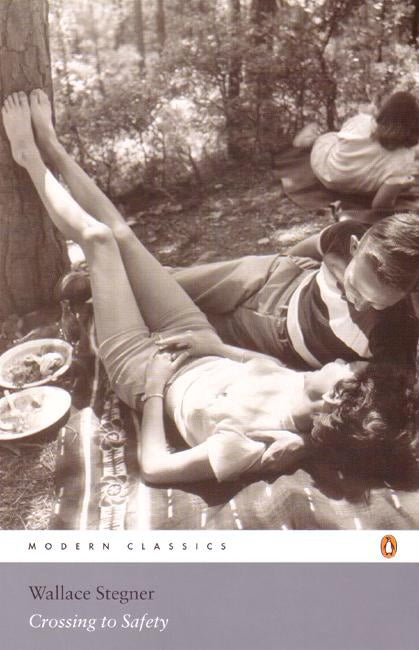
To explain what I found, let me catch you up quickly on the writer, and then the book.
Wallace Stegner (1909-93) grew up shooting gophers on a borderlands farm in Eastend, Saskatchewan, in his own words a “dunghole sagebrush town on the disappearing edge of nowhere”. His father, a bounder, always chasing the next money-making wheeze, moved the family to Salt Lake City in the 1920s to get into the bootlegging game. But even in this he failed, and years later would take his own life, and that of a supposed lover, with a pearl-handled revolver, in the Heron Hotel, on Second South, just East of State Street. Stegner as a young man was forced to escape the influence of this wilful and dangerous man: first, he fled to the University of Utah (“I was as happy as a shrimp in cocktail sauce”) and later, to his indelible career as a writer.
This much I learned from Alex Beam’s excellent new biography, Wallace Stegner: Dean of Western Writers (Signature Books, 2025). But what of the novel itself – Crossing to Safety - which Beam describes as Stegner’s most intimate, most hopeful and finest work.2
The story is a semi-autobiographical account of the life and friendship of two couples: Larry and Sally Morgan (representing Stegner and his wife, Mary) and Sid and Charity Lang (based on their lifelong friends, Phil and Peg Gray). In the novel, the Morgans and the Langs meet as junior faculty on campus in the 1930s and their lives entangle, separate and come together again over the 40 years which follow. The central event is an ambitious, early expedition through the Vermont forests, meticulously planned some time just before the war, by Charity. But on the trip, disaster strikes: Sally succumbs to polio and is permanently disabled.
How this shared tragedy defines and disturbs the couples’ friendship is the unspoken subtext of a book whose original, working title was Amicitia. “In a way that no book of mine has ever been”, Stegner said, “[this book] is an attempt to tell the absolute, unvarnished truth about other people and myself”. But the details of what exactly happened to Sally are never really spelled out. It’s true that there are references in the novel to Sally’s polio (‘This was where you had your terrible bad luck. —Bad luck? —The polio”) but let’s come back to those in a moment.3
What I want to focus on first is how this epic novel shines light on the atomic structures of a lifelong friendship. The binding forces are the mutual attraction that first brings the elements together in a compound; the affection and respect that builds between those elements through the milestones of work, career and family; and the eventual co-dependency which develops when ill-health sets in. But there are also repulsive forces, chief among them the urge to control other people. And chief among the controlling characters in Stegner’s novel is: Charity Lang.
Many scenes show the tension building between creative, free-thinking Larry and directive, often overweening Charity. Larry has an opportunity to help Sid in his career, but Charity initially forbids it. Preparing for the camping trip, Charity insists Sid has forgotten tea; he hasn’t, but she makes him fetch more. (Later on, Larry finds the first carton and ruefully burns it on the fire.) When Charity is dying, she plans to spend her last days with Sally, rather than with Sid, who wants to be at her side. In each controlling moment, Sid flexes in compliance, but Larry bristles.
There is another scene from the camping trip where tension builds between Larry and Sally, which I need to quote in full, because it here the Easter Egg is found. The picture unfolds as follows:
The fire was ebbing to good hardwood coals, the water was boiling, I had the corn stripped and lying on a bed of husks, Sid had split the chickens down the middle with the axe.
“How long on these?” he said. “I understand steaks, I never barbecued chickens.”
Before anyone else could venture a guess, Charity jumped up, intensely smiling. “Let me look,” she said. “Pritchard has a chapter on outdoor cooking.”
That name was a spell that immobilized us. Sid squatted by the fire and waited. Sally and I carefully avoided letting our eyes get entangled. Charity sat down on a rock, her combed wet hair hanging down on both sides of her face, and consulted her bible. She turned pages, stopped, read, flipped another page, read again.
“Ah, here! ‘First rule for camp cooking: better underdone than overdone. Three minutes to a side, over good hot coals, is about right for any camp-cooked meat.’ ”
I took that in, but I couldn’t keep it in.
“He’s talking about hamburgers.”
“No, he says any camp-cooked meat”
“They’ll be raw.”
Charity raised her head and looked at me. [ … ]
“Well, I’m going to have mine three minutes to a side. The rest of you can have yours any way that suits you.”
She said this smiling. What Sid slid onto our plates a little later had been cooked exactly six minutes by the watch. It was barely seared, still bleeding internally, tough as life in a Vermont barnyard.
I tried, though I am a rotten-roasted westerner and hate raw meat. I suppose the others tried too. We sat there on our rocks and logs in the late thin sun, with the heat of the fire in our faces and the growing coolness at our backs, and did our best. When I couldn’t cut my chicken with the table knife, I used my Swiss army knife. That cut all right, but what it cut could hardly be chewed. After a couple of mouthfuls I fell back on the corn, which was marvelous.
Stegner, Wallace. Crossing to Safety (Penguin Modern Classics) (p. 183).
There is something about this scene which feels deliberate. We sense that the raw chicken matters, even if we don’t know quite why, like one of those plot hints dropped early in a movie – its purpose only becoming clear later on. And by this point in the story, we know that we don’t need the chicken scene to understand how Charity operates, or how that makes Larry feel. So the reader ends up thinking: uh-oh, they shouldn’t have eaten that chicken; now someone is going to get sick.
But apparently, nobody does. The raw chicken scene is a cul-de-sac, there is no plot link. The expedition continues through the Vermont wilderness. The friends hike trails, swim lakes, dive through waterfalls and enjoy the beauty of the New England forests – until suddenly Sally’s fever arrives.
Stegner never says that Sally catches polio, but later in the story, other characters mention the disease by name and we infer what must have happened. But that scene with the raw chicken seems so deliberately placed, just before Sally falls ill. So I found myself searching online: wait - can you catch polio from eating raw chicken?
You can’t. I checked. The poliovirus is transmitted through what doctors refer to as the oral-fecal route: in other words, bad sanitation. What you can get from raw chicken however are salmonella and campylobacter infections. This was not well understood in the 1930s, at the time of the Morgans and Langs fictional hiking trip. But it was well understood by the 1980s, when Stegner was writing Crossing to Safety.
So my next question for the internet was this: what can you catch from salmonella, or campylobacter, which could have been confused for polio in the 1930s? And to this question comes a resounding answer, clearer than I had expected: Guillain-Barré Syndrome, or GBS as it is known. The terrible symptoms of GBS are easily confused with those of polio, indeed some experts now argue that the most famous polio case in history (that of President Franklin D. Roosevelt) was more likely to have been a case of GBS.
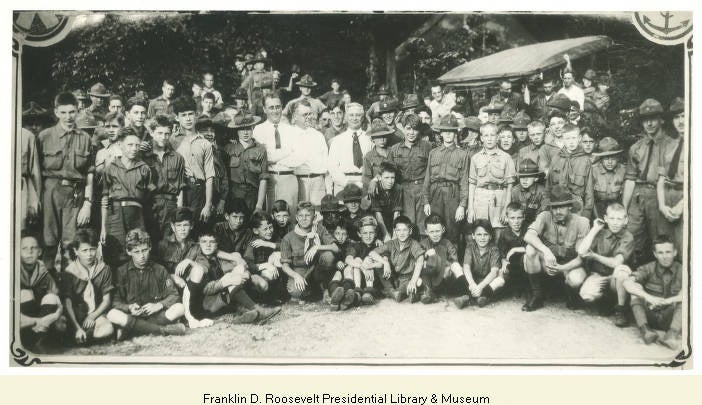
Would Stegner have known about GBS? It sounds perhaps obscure. But in fact, GBS was a well publicised condition in the 1970s and 1980s, after a small number of cases were linked to mass vaccination campaigns - most famously the 1976 Swine Flu campaign, which was initially intended to cover the whole US population. But early evidence of a small number of GBS cases triggered by the vaccine led to cancellation of the national programme. So GBS was front page news.
And if Stegner had looked into GBS in the mid 1980s, when he was writing Crossing, he would have easily found journal articles linking the onset of GBS to an initial campylobacter infection. By the early 1980s this was well understood, and there were several clear pieces in mainstream medical journals. So it seems likely that Stegner would have known about GBS, understood its polio-like presentation, and that with a few hours research on the Stanford campus, where he worked for four decades, he would have learned how GBS can be triggered by exactly the kind of bacteria you would find in an undercooked camp-fire chicken.
So: Stegner had the opportunity to place this Easter Egg in the novel, but did he have a motive? What difference would it make if Sally Morgan had GBS, not polio?
The inescapable answer is that everything would change. How we read the novel depends entirely on the chicken: if Sally has polio, then the central tragedy at the heart of Crossing is essentially random, an example of dumb, bad luck. So it’s a novel about friendship, and about fortune, good or bad. Charity’s stubbornness is there in the background, but it’s an annoyance and perhaps a forgivable one. It can be traded off at the margin against all the benefits of a lifelong friendship. In this reading, blind luck is the villain; friendship is the mainstay.
But if Sally has GBS, or even if Sally might have GBS, another reading comes into view. If Sally caught GBS from the chicken, then Charity, with her controlling behaviour (so reminiscent of Stegner’s own, intemperate and wilful father) was the villain of the piece. In this reading, Crossing is a novel about survival, and our addiction to the bonds of friendship is as much the poison as the cure. Charity insisted on the chicken, Sally paid the price. It is a much darker and harder reading. Friendship in this reading is a two-edged sword, and both sides of the blade are sharp.
If the GBS reading is right, then the layers of irony are deep, for it is somehow Sally’s tragic illness which cements the friendship between the Langs and the Morgans. The Langs, who are wealthy, pay Sally’s medical bills, as they paid for other things early in the friendship. If Sally has polio, this feels like generosity; if she has GBS, caused by Charity, we have the opposite feeling. Larry spends a lifetime paying back the loan. If Sally has polio, this feels honourable; if she has GBS, thanks to Charity, then it’s insane that he does. Everything in the book is upside down if Sally has GBS, not polio. Everything is different if Sally’s tragedy is Charity’s fault.
And let’s spend a minute on that name: Charity. It’s the only one of the four names which Stegner changed significantly from real life to the book. Wallace went by Wally with his friends, so ‘Larry’ is an obvious alias. Wally’s partner in real life was Mary, and ‘Mary’ maps to ‘Sally’ easily enough. Wally’s close friend, Phil Gray, becomes Sid Lang in the book, his monosyllabic first and last names do not even lose their central vowels. But Phil’s wife Peg becomes Charity in the novel, a completely different name. It’s the only name which Stegner really changes, and the only new name which has a meaning. It’s almost as if Stegner was trying to tell us something. It’s almost as if Stegner is asking: is Charity’s charity really charity? And we know what Larry Morgan’s answer would be.
There are other clues which point to GBS, not polio. Take this passage:
“You’re a windbag,” Charity told me. “And you are not doing any dishes. You can be the opérateur of the music machine. Sid does the dishes.”
“Why should he get to do dishes when I can’t?”
“Because that’s our agreement. … I cook, he cleans up.”
“Say it isn’t so,” I said to Sid.
He said it was so. No amateurs allowed in the kitchen.
Sally and Mrs. Fellowes were looking from face to face, smiling, trying to find an agreeable way out of the impasse.
“Why don’t we leave them till afterward, then?” Sally said.
Sid looked as if that might suit him, but then he looked at Charity and saw by her clouded face that it wouldn’t suit him after all.
“I’ll just get them done before they all dry out and harden.”
“Then you’ll miss the music,” I said. “… Really, I want to help. I insist.”
“Insist all you want, you aren’t allowed to,” Charity said. “You’ll find the Ninth Symphony on top of the pile over there.”
Sid had quietly got up and begun to stack dishes on a tray. Charity snuffed the candles. Sally, who had stayed out of the argument because however much she would have liked to, she would have been no help doing dishes, was telling me with her eyes to knock it off and submit. So I went and helped her stand up; and because it was now pretty dim in the dining room, I held her while she bent to lock her knee braces. People who can’t feel their feet must be able to see them, or they lose their balance when they bend down.
Stegner, Wallace. Crossing to Safety (Penguin Modern Classics) (pp. 217-218).
Now, I’m not a physician so I can’t tell you quite what it was about that passage that made me doubtful. But something made me stop on this page. Is it true, I wondered, that people with polio can’t feel their feet?
It isn’t true, and here’s why: the poliovirus typically attacks the motor neurons (anterior horn cells) in the spinal cord and brain stem, but the sensory nerves generally remain in tact. So there is weakness, muscle wasting and loss of movement, but sensation is usually preserved. So people with polio can feel their feet. GBS, in contrast, is an immune-mediated attack on peripheral myelins or axons, and it affects both the motor and sensory nerves directly. Numbness and parasthesias (pins and needles) are common. People with GBS can’t feel their feet.
So did Stegner make a mistake? Did he mix up his facts? Or was this passage a small, planted clue – a breadcrumb, marking out the trail to a bleaker reading of the novel? The more I think about it, the more I think that that Stegner might have laid these breadcrumbs for us to follow. I am not concerned that the characters in the novel do themselves refer to Sally’s illness as polio - since they are of their time, and in the 1930s, would have known nothing of GBS, or campylobacter. That none of the characters know the truth just adds to the layers of complexity. The better question is what did Stegner know? And what did he want us, as readers, to figure out?
If the GBS reading is correct, then the chicken dinner scene is an outrageous Easter Egg. It’s only there for those who know, but it turns the novel inside out. But there is one problem I still need to deal with before we can reach a conclusion. That problem is that Stegner himself did (occasionally) talk about the themes of the book, and sometimes he referred explicitly to polio. Here’s one example, from one of his biographical essays:
Part of the summer of 1937 we spent on bicycles in France and England. Coming home broke, we took another teaching job, this time at the University of Madison in Wisconsin. Many years later I would write up those two years, fictionalized to taste, in the novel ‘Crossing to Safety’. But we did not, like the Morgans of that book, end up with dismissal, polio and a safety-net job in the publishing business.
Stegner, Wallace. Where the bluebird sings to the lemonade springs: Living and Writing in the West. (Random House, 1992). Page 20.
It’s an indirect reference, granted. But he does seem to be saying that the book is about polio, and why would he do that if he wanted to leave open the possibility that it was about something else? It’s initially a challenge to the Easter Egg idea, and when I first found this passage, I wondered if the GBS thesis must fall? But then I remembered: it’s not an Easter Egg, is it, if the writer tells you where to find it? Or even if he tells you that it is there. The definition of an Easter Egg is that you have to discover its existence for yourself.
So perhaps, in public, Stegner needed to dissemble. He needed to stick with the first reading, the cover story. You might say that he needed to tell a lie - even if he told it with a wink and a nod to those who had figured out the truth. The alternative would be to go out there, in public, and say more directly ‘I put an Easter Egg in there, and you all missed it! Now let me explain to you what’s really going on in this book’.
And that just doesn’t fit with what we know about Stegner’s attitude or style. In the Stanford programme, Stegner taught his students never to explain things fully. Alex Beam points out a short essay, A note on style, in which Stegner shares ‘a few rules of thumb’ for writers. The first is to “start in the middle of things, begin in motion”. And then he continues: “never explain too much” because “a reader is offended if he cannot participate and use his mind and imagination, and a story loses much of its momentum the moment everything is explained”.
So I don’t think that Stegner would have wanted to explain the GBS reading. He might not even have confirmed it, if we had found it in his lifetime. I think that perhaps he just left it there, for us to discover for ourselves, if ever we were able to.
But he did leave us a trail of breadcrumbs to follow, including one last clue which is not so much a tiny breadcrumb as a great big, flashing red siren light. It is the mother of all clues, and it jumps from the page and says to the reader: ‘Hey, pay attention! Don’t take this section at face value – because there may be a subterfuge afoot.’ And guess where he put this flashing red warning light about a subterfuge? Right next to the Easter Egg, in the middle of the raw chicken scene. I’ll continue the passage, from where we left off above:
… When I couldn’t cut my chicken with the table knife, I used my Swiss army knife. That cut all right, but what it cut could hardly be chewed. After a couple of mouthfuls I fell back on the corn, which was marvelous.
I was already on my second cob when I heard a clank down the log. Charity had set her plate down hard.
“Oh, phooey!” she said. “It is raw. You were right, three minutes aren’t nearly enough. Now why should a man who writes books on camping be as wrong as that?”
“Never trust people who write books,” I said. “We’re all a bunch of liars.”
Stegner, Wallace. Crossing to Safety (Penguin Modern Classics) (p. 183). (Function). Kindle Edition.
Now, it takes some mettle to put a statement like that in a book which you have described, in your own words as an attempt to tell the “absolute, unvarnished truth”. So if you don’t think Stegner is trying to tell you there is something to look at here, then I wonder what you do think he is doing? My view is that this line is a sign-post to a superbly erudite, subtle, alternative and ultimately darker reading of an end-of-life novel which is already a masterpiece on its own terms. And once you see the signpost, and realise what foul and murky depths it points to, you really do wonder if this might have been, after all, the greatest American novel.
The phrase ‘valedictory masterpiece’ is from Alex Beam. I think it’s spot on and needs to be re-used wherever possible.
This is not a journal article, so I’m not doing laborious sourcing of page numbers and publisher, etc, for every quote. But I want to give full credit and attribution to Alex Beam. He doesn’t discuss GBS or the raw chicken dinner, which for better or worse is my own idea. But he has produced a gem of a book about Stegner, bursting with biographical insight and sensitive detail about the author, his life and his times. Highly recommended to any fellow Stegner acolyte. The biographical details and many of the Stegner quotes cited in this essay mostly come from his wonderful book.
Stegner, Wallace. Crossing to Safety (Penguin Modern Classics) (p. 232).


